
Where We Have Been - Europe - Greece
Europe had been on our bucket list for years before we finally made it there. From the moment we arrived, the history captured us—walking streets people have walked for centuries, standing in places we’d only ever seen in movies or read about in books, and realising how much of the world’s story is layered into everyday life. It’s a place we never seem to get enough of, and it now sits very high on our list of destinations.
If you’d like to follow our journey in order, here’s our route—based simply on where we stayed: Rome, Florence, Nice, Barcelona, Paris, Berlin, Prague, Munich, Zurich, Venice, Milan, Athens, Istanbul.
We arrived in Athens and did what we always do in a new city: headed straight out for a wander.
Not long into that first explore, we turned up a side street and suddenly found ourselves face-to-face with a chanting crowd marching towards us. For a moment it was a bit of a wait—what’s happening here? kind of situation, until we realised we (and they) were approaching the US Embassy from opposite directions. We never did work out what the protest was about, but we took it as a cue to sidestep and let the moment pass.
That ended up being a pretty accurate snapshot of our time in Athens—fascinating and full of curveballs. There were strikes while we were there, so buses and ferries (including those heading out to the islands) weren’t running, which made getting around more of an adventure than we’d planned. And we had a couple of those “did that really just happen?” news moments too, like hearing about small explosions involving rubbish bins near the university. Nothing that stopped us enjoying Athens, but it definitely kept the trip feeling lively and unpredictable.
While it’s pretty hard to miss the Acropolis—sitting up there on its rocky perch like it’s keeping watch over the whole city—we decided to save it for later and start somewhere else.
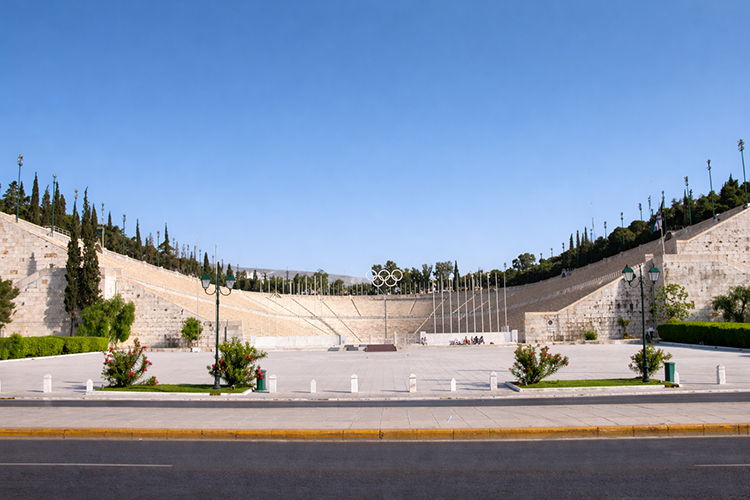
First stop was the Panathenaic Stadium. It’s one of those places that feels instantly special, partly because it’s so striking, and partly because of the history. Built entirely of marble, it’s also known as the birthplace of the Modern Olympics, with the first Games held there in 1896. Even if you’re not especially sporty, it’s hard not to get swept up in the “imagine the atmosphere” factor.
Agios Georgios Chapel on Mount Lycabettus
Next up were a couple of the other “big hitters”: the Temple of Olympian Zeus, and the nearby Arch of Hadrian. The Temple of Zeus is all about scale—those towering columns (what’s left of them) still feel enormous, and it’s easy to imagine how jaw-dropping the whole thing must have been when it was complete.
Just a short stroll away, the Arch of Hadrian makes a surprisingly memorable marker as you move through that part of the city—one of those places you keep turning back to look at, almost without realising. It’s not as vast as the temple, but it has this satisfying “threshold” feeling, like you’re stepping between two different Athenses as you pass through.
And tucked inside the Ancient Agora, we visited the Church of the Holy Apostles. It’s a small 10th-century Byzantine church, and it feels like a calm pocket of time in the middle of everything—quiet, cool, and grounding after the scale and bustle of the ruins around it.

Temple of Olympian Zeus (the Olympieion)

Arch of Hadrian
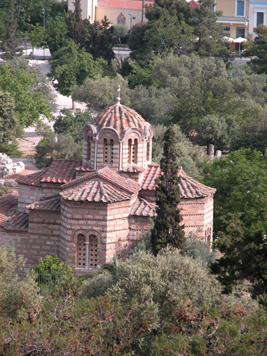
The Church of the Holy Apostles
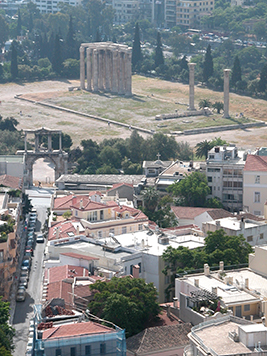
Temple of Olympian Zeus (the Olympieion)
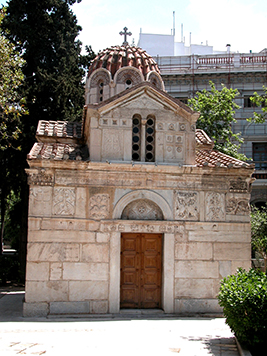
Agios Eleftherios / the “Little Metropolis”
From there we took the funicular (cable car) up Mount Lycabettus, which is a very easy way to get a big reward for not much effort. The view over Athens from the top is incredible—city in every direction, with the Acropolis still managing to steal the scene. Right at the summit is the little Agios Georgios Chapel (also called the Chapel/Church of St George), and it was absolutely worth a look too. Small, bright, and quietly beautiful against all that open sky.
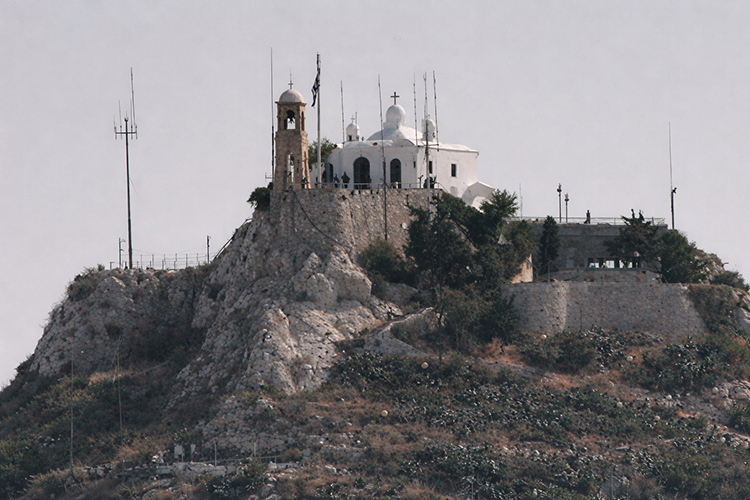
Agios Georgios Chapel on Mount Lycabettus
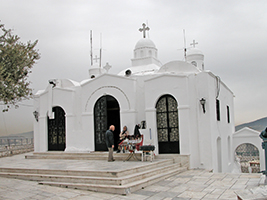
Agios Georgios Chapel on Mount Lycabettus
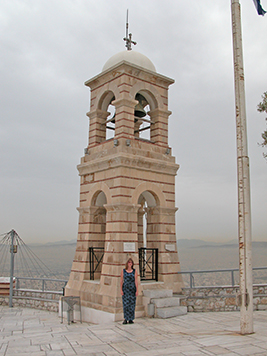
C @ Bell tower on Philopappos Hill

View from Mount Lycabettus
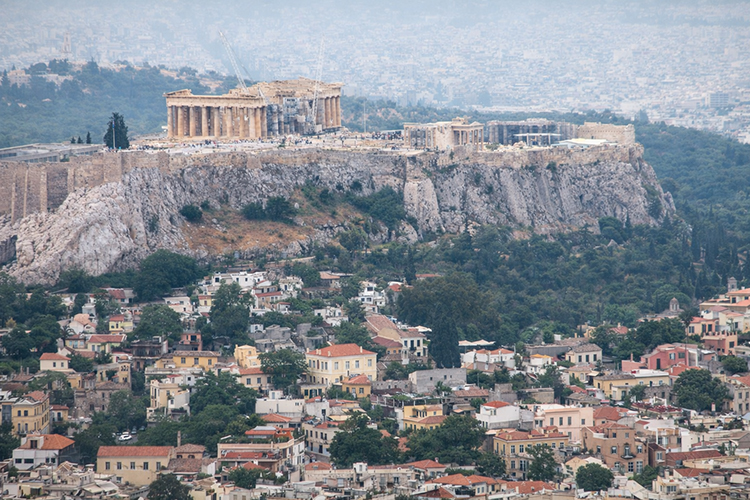
The Acropolis from Agios Georgios Chapel on Mount Lycabettus
After having a lovely dinner at a small cafe under the spectacle of the Acropolis, the next day it was finally time to go up and explore this ancient marvel properly.
Rome has some pretty impressive “very old” buildings, but the Acropolis puts history into a whole different perspective. Some of what you’re looking at up there was already more than 2,000 years old by the time the Colosseum was built—and honestly, it’s hard not to feel a little bit humbled. Beyond the beauty, we kept coming back to the how of it: the skill, the ambition, and the sheer audacity of building something this magnificent on such a steep, exposed rock.
We didn’t rush it. We spent a good chunk of time lingering over the artefacts and details, trying to take it in rather than just ticking it off.
Entering the Acropolis precinct, we wandered through the lower-level ruins as we climbed, stopping every now and then to catch our breath and look back out over Athens. From up there, you get those sweeping views that make the city feel like it’s stretching forever—and we loved spotting the Temple of Hephaestus in the distance, sitting solid and serene below.

Tower of the Winds and The Acropolis at sunset

The Acropolis
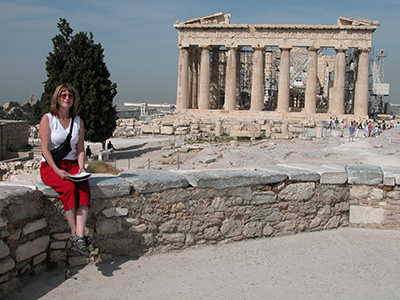
C @ The Parthenon.
The Acropolis isn’t just one building—it’s more like an entire ancient precinct gathered on top of the hill, with ruins and monuments appearing around corners as we climbed. The Parthenon is the obvious star, and it really does have that “we can’t believe we’re actually here” effect in real life, but what surprised us was how much there is beyond it.
One of our favourites was the Erechtheion, one of the most sacred buildings on the Acropolis, mostly because of the Caryatids—the famous porch where the columns are carved as women. Even in the middle of a busy site, that spot felt oddly calm and reverent, like everyone instinctively lowered their voice. And then there’s the Odeon of Herodes Atticus on the southern slope: a stone theatre tucked into the hillside that’s still used for performances today, which made it feel less like a relic and more like the city is still in conversation with its past.
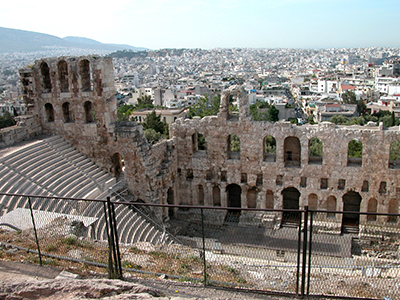
The Odeon of Herodes Atticus / The Herodeon

Temple of Hephaestus / The Hephaisteion

Porch of the Caryatids on the south side of the Erechtheion

Propylaea, the monumental gateway to the Acropolis
The Acropolis Museum was the perfect follow-on—like stepping straight from the ruins into the “okay, now let’s actually understand what we’ve just seen” part of the day. The highlight for us was seeing how the Parthenon sculptures are laid out to match the building itself, with sections reconstructed so you can picture the whole story, and casts filling the gaps where originals are elsewhere.
We also spent time lingering over smaller pieces we might’ve rushed past if we were tired—marble reliefs connected to the Theatre of Dionysus, and a mix of bronze finds (including weapons) that made the ancient world feel oddly immediate and practical, not just grand and mythic.
And because Athens has a way of spoiling you for choice, we ended up going deeper into bronze masterpieces too—like the Artemision Bronze (the one that’s famously debated as Zeus or Poseidon) and the Jockey of Artemision, both recovered from the sea near Cape Artemision. Even after a day of marble and columns, those bronzes stopped us in our tracks.
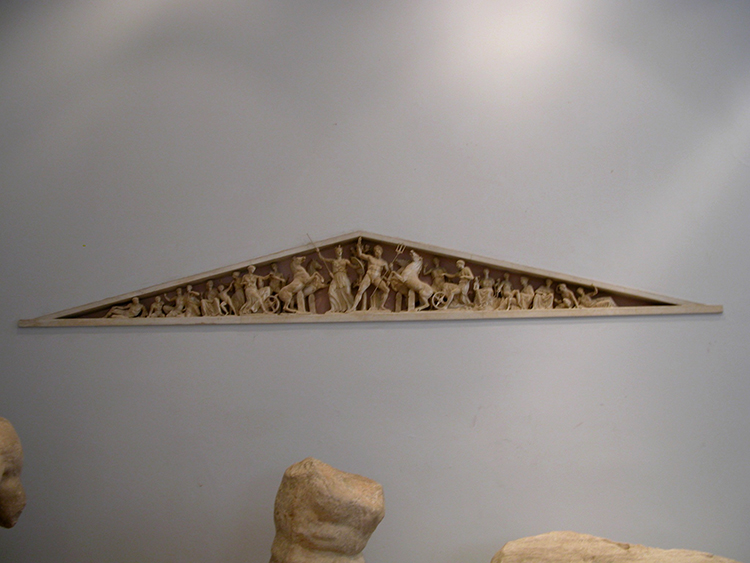
Reconstruction of the East Pediment of the Parthenon
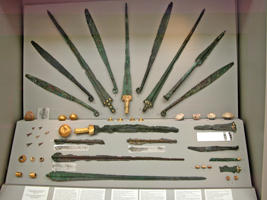
Bronze Weapons
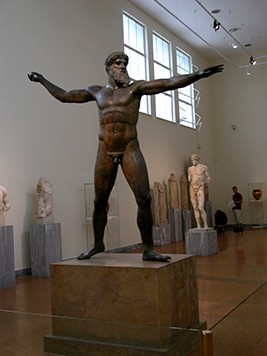
Artemision Bronze — Zeus or Poseidon?

The Artemision Jockey (Bronze)
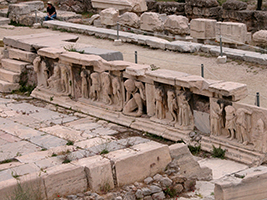
Relief panels from the Theatre of Dionysus
Not in the Museum
On the south slope of the Acropolis

Archaic Marble Horse Statue
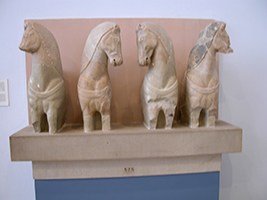
Marble Horse Statues from the Parthenon
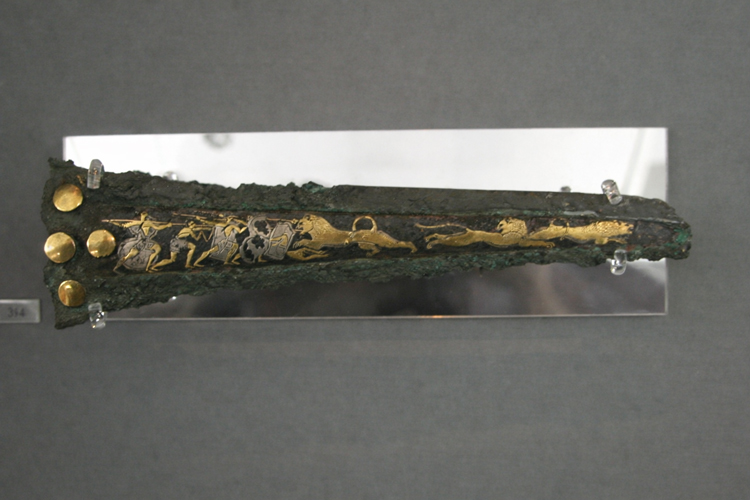
Bronze relief fragment from the Acropolis
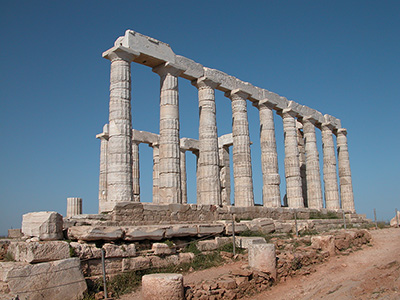
Because of the industrial action happening during our visit, a lot of the Greece we’d pictured—especially anything involving buses, ferries, or island-hopping—suddenly became much harder to pull off. So we pivoted. One option that presented itself was a trip down to Cape Sounion, about 70–80 km from Athens, to see the Temple of Poseidon perched right on the edge of the sea. The cape itself is spectacular—windy, bright, and dramatic—one of those places where you can understand why the ancients chose it for a sanctuary. And while the site has been sacred since at least around the 7th century BCE, the temple we saw is believed to date from the mid-5th century BCE—so it’s been around not quite as long as the Parthenon at the Acropolis.
One thing our travels around Europe kept bringing home to us was just how often explorers and collectors from European countries (and others) removed artefacts from elsewhere, then displayed them back home as trophies of empire and “discovery.” You see it again and again: objects lifted out of their original context and presented as national treasures in museums thousands of kilometres away.
And then, at Sounion, we ran into a different kind of “mark-making”—more personal, more human, and a bit cringe in hindsight. Carved into the stone is the name George Lord Byron, etched into the base of one of the temple’s columns. It’s generally linked to his travels through Greece around 1810–11. Part of us had that “wow, Byron stood here” moment… and part of us thought, mate, really? Ancient places seem to invite big feelings—and apparently, some people have always tried to leave proof they were there.
Casa Batlló

Casa Batlló
Tip: Allow plenty of time to soak up the ancient history that makes Athens—and Greece as a whole—so special. It’s not the kind of place you want to rush. The best moments often come when you slow down: lingering a little longer at a site, taking the scenic detour, or simply sitting with the view and letting the layers of history sink in.
Highlight: Without a doubt, the Acropolis precinct. Coming from a historically young country, we found ourselves in awe of Europe everywhere we went—just the sheer depth of history, and the fact that so much of it is still standing around you in everyday life.
But the Acropolis really is next level. It’s not only the age of it, or the scale, but the way it sits high above Athens, watching over the city like it always has. You can spot it from so many streets and rooftops, and it never really stops feeling unreal that something so ancient is still there, dominating the skyline with that quiet, majestic presence.
Memory: Sitting at a Greek café on a street corner in Athens’ old historic neighbourhood on the slopes below the Acropolis, we looked up as the sun began to drop. As the light shifted, the Acropolis above us was bathed in an almost supernatural glow—one of those moments that makes you go quiet without even meaning to, and one we can still picture vividly to this day.
Closing Thought: Athens absolutely lived up to its reputation, and we’d love to get back—partly to refresh our memories, and partly to pick up where we left off and explore more of Greece, including a few of the islands.
We’ve been lucky over the years to travel more than many—though nowhere near as much as we still aspire to. The world is a big place, and there are so many destinations left to discover: places we haven’t seen yet, places we want to explore more thoroughly, and old favourites we can’t wait to reconnect with.
Elsewhere on Crows on the Go, you’ll find:
• more about our travels and the places we’ve been
• our thoughts (and, in some cases, tips) on those destinations
• the places that have become “special” to us
• and more!