
Where We Have Been - Europe - Turkey
Europe had been on our bucket list for years before we finally made it there. From the moment we arrived, the history captured us—walking streets people have walked for centuries, standing in places we’d only ever seen in movies or read about in books, and realising how much of the world’s story is layered into everyday life. It’s a place we never seem to get enough of, and it now sits very high on our list of destinations.
If you’d like to follow our journey in order, here’s our route—based simply on where we stayed: Rome, Florence, Nice, Barcelona, Paris, Berlin, Prague, Munich, Zurich, Venice, Milan, Athens, Istanbul.
Turkey wasn’t originally part of our Europe itinerary, but circumstances had other plans. David’s father and brother decided they were heading to Gallipoli to tick off one of David’s dad’s bucket-list experiences. It was far too good an opportunity to pass up, so we added Turkey to our plans and flew in to meet them in Istanbul.
We arrived a day or so before they were due, so we kicked off our Turkey adventure by exploring Istanbul.
Formerly Constantinople (and long before that Byzantium), it’s the kind of city that makes your brain do a little time-warp. It’s been the seat of emperors and sultans, the capital of a Christian empire and later an Islamic one, and you can feel those layers everywhere you walk—sometimes in the same skyline.
And honestly… not many cities can match that exact combination. Istanbul is pretty unique in being the imperial capital of the Eastern Roman (Byzantine) Empire and later the Ottoman Empire, and in holding that central “capital city” role for both Christian and Islamic worlds.
As well as its layered history as a capital city, Istanbul—straddling the Bosphorus—quite literally has a foot in two continents, Europe and Asia. It truly is a unique place.
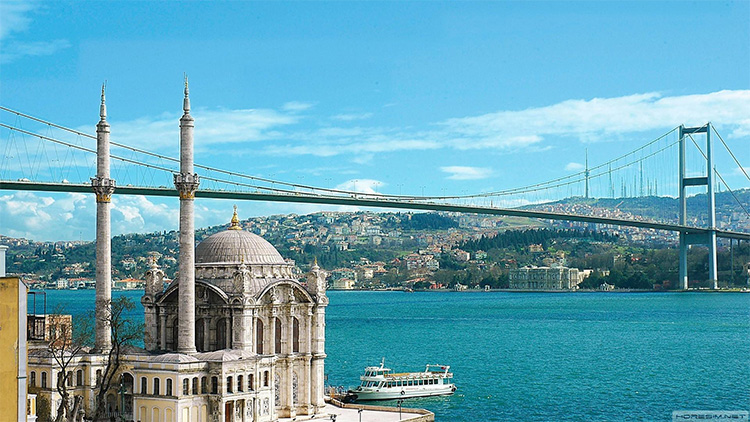
Ortaköy Mosque and the Bosphorus Bridge (15 July Martyrs Bridge) – looking from Europe to across to Asia
There is so much to see in Istanbul. We visited Topkapi Palace, where we marvelled at the exhibits in the Imperial Treasury. We also went to the Hagia Sophia Grand Mosque, a nearly 1,500-year-old architectural marvel which was once the cathedral of Constantinople before becoming a mosque. And of course we took the opportunity to visit the Sultan Ahmed Mosque—better known as the Blue Mosque—a relative youngster by Istanbul standards at only around 400 years old.
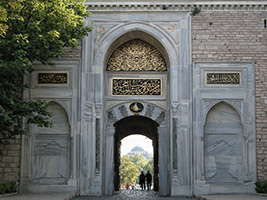
Imperial Gate, ceremonial entrance to Topkapı Palace
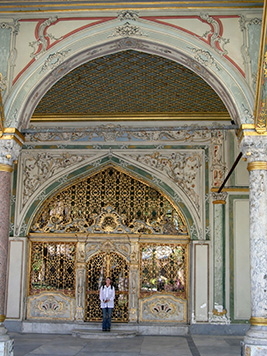
C @ Imperial Council Chamber at Topkapı Palace
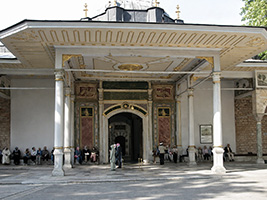
Audience Chamber inside Topkapı Palace.
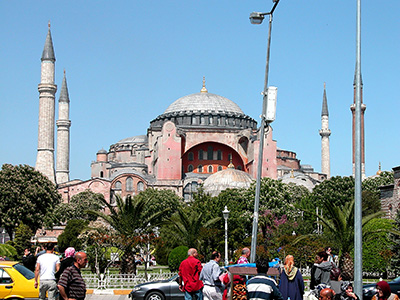
Hagia Sophia Grand Mosque
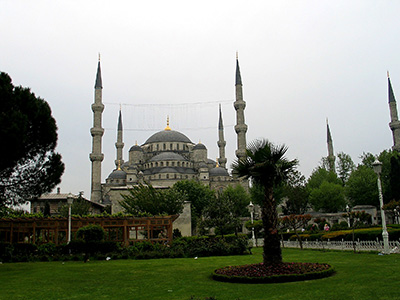
Sultan Ahmed Mosque (the Blue Mosque)
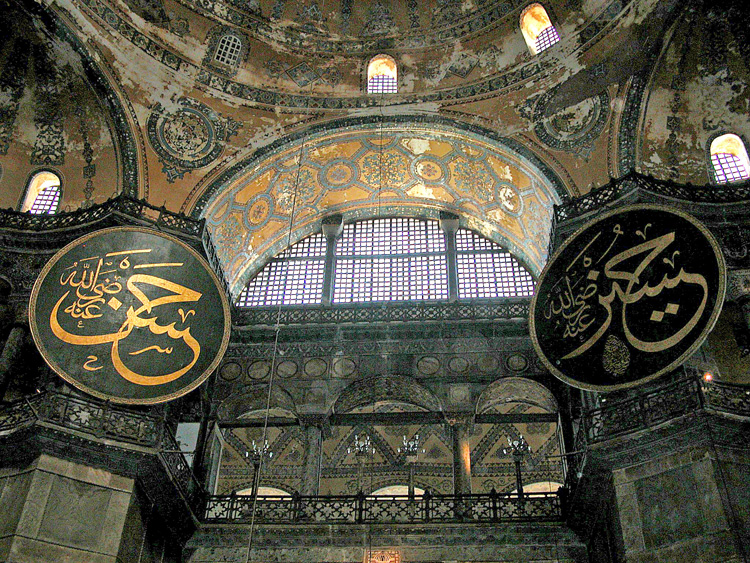
Inside Hagia Sophia Grand Mosque
We also wandered across to Sultanahmet Square (the site of the former Hippodrome), where David was quick to spot a couple of obelisks. The first was the Obelisk of Theodosius, installed by the Roman Emperor Theodosius I in the 4th century AD. Nearby is the Walled Obelisk (also known as the Constantine Obelisk), built in the 10th century by Emperor Constantine VII Porphyrogenitus. Even in the middle of a busy square, it’s pretty striking to realise you’re looking at monuments that have been standing there for centuries.
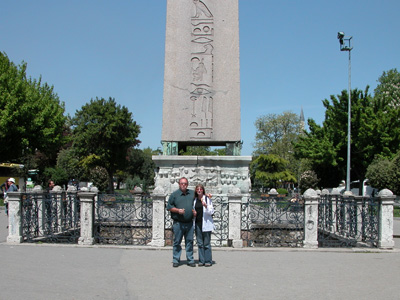
D & C @ The Obelisk of Theodosius in Sultanahmet Square
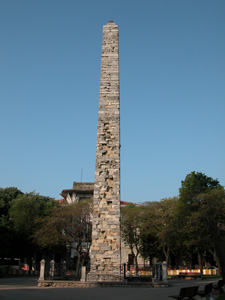
The Walled Obelisk in Sultanahmet Square
Then it was time for some shopping, even though we had said, once again, no mementos. As always seems to happen when travelling, our willpower turned out to be fairly weak. We wandered into a store and got talking to the owners, a pair of brothers, who told us tourism had been quiet. We ended up buying a handcrafted leather camel from them.
From there we went on to experience the Grand Bazaar, an absolutely enormous covered market spanning some 30,000 square metres and home to more than 4,000 shops. We did have a look around, but the sheer size of the place—and the crush of people, with more than 250,000 visitors a day—soon had us searching for quieter spaces.
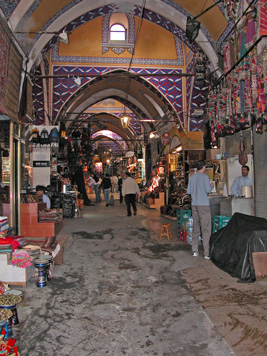
The Grand Bazaar
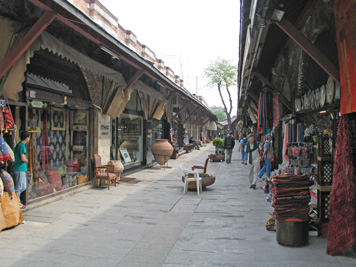
The Shopping Lane
On the way back to our accommodation, we stopped briefly at an ATM, where David greatly enjoyed making a withdrawal and, for a moment at least, having a million in cash in his hand—albeit in lira. We then found ourselves walking down a small open lane, where we paused to admire some rugs in a shop window. Back in New Zealand, we had once attended an auction of Turkish rugs where one of our friend’s mothers bought a stunning Tree of Life rug, so when we spotted one in the window we decided to go in and see if it was for sale.
What happened next ended up being one of the highlights of our time in Istanbul. The salesperson pulled out the rug for us, then spent more than an hour showing us others, explaining the differences between them—often based on where they came from, the weaving techniques used, and even, for many buyers, the importance of the rug’s age. It would be easy to assume he was simply trying to upsell us, but that really didn’t seem to be the case. While some of the rugs were more expensive than the one we had first asked about, just as many were cheaper.
Even so, our hearts were set on the small silk Tree of Life rug that had first caught our eye, and we left the shop with it in our possession. It has never been on the floor; instead, it hangs on the wall.
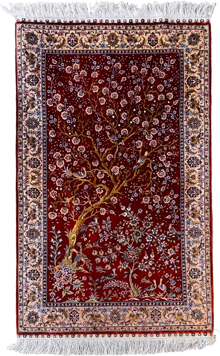
An Example of a Tree of Life Rug
From Istanbul, once David’s dad and brother had arrived, we grabbed a rental car and set off together—part family reunion, part pilgrimage—to experience Gallipoli as a group and tick off one of David’s dad’s bucket-list items. For more information on Gallipoli itself, and what this place means to New Zealanders, refer to David’s Places.
On the way, we chose a coastal route—partly to avoid the heavier traffic on the main highways, but mostly to slow things down a bit and actually enjoy the local scenery along the way. It turned out to be one of those drives that becomes a story in its own right. Picture this: we’re trundling along a narrow gravel road when we come around a bend and spot a couple of elderly gentlemen sitting in old camp chairs beside the roadside, with a hand-painted sign that simply reads “Toll Road.”
We pulled over—partly because it felt like the polite thing to do, and partly because we were too amused not to. We paid the “toll” (many lira, but basically pocket change for us), exchanged a few smiles, and carried on.
Further along, we passed through makeshift chicanes created by piles of logs blocking one lane of the road, and we kept marvelling at some of the structures we came across. It wasn’t the fastest way to get there, but it was certainly the most memorable.
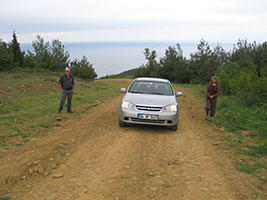
Rental Car on the “Toll” Road
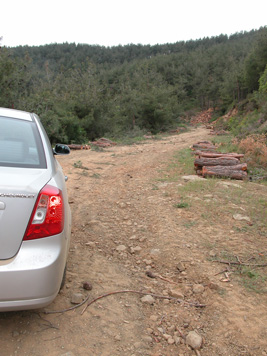
Log Chicanes on the “Toll” Road
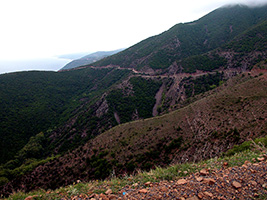
The “Toll” Road
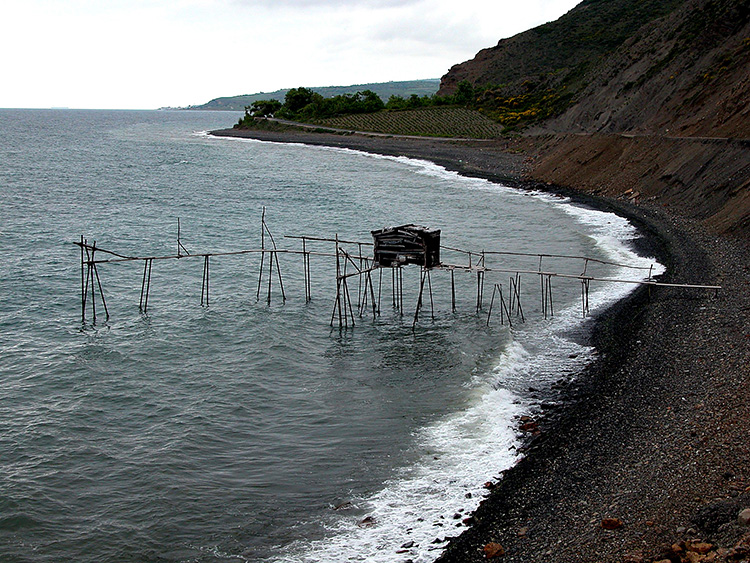
Fishing Access, maybe, on the Toll Road
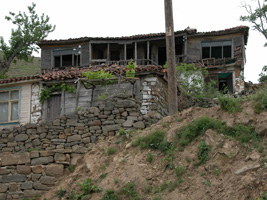
House on the “Toll” Road
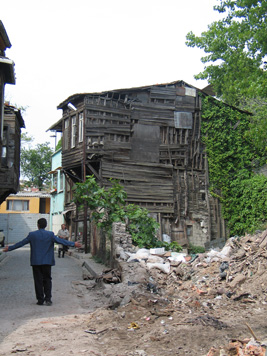
House on the “Toll” Road
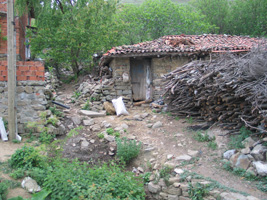
House on the “Toll” Road
A couple of other memorable moments came as we worked our way through the back blocks. One was a quick pit stop in a small town. After Carolyn discovered that toilets in that part of the world could be… an adventure, the four of us (three males and one female) wandered into a café for a drink and a snack—only to be met with a sudden, awkward silence.
We took one look around and realised why. The place was filled entirely with middle-aged to older men, and Carolyn’s arrival had clearly crossed some unspoken line. Nobody said anything, but the atmosphere said plenty, so we made a quick, polite retreat.
Not far away we stumbled across a little shop absolutely plastered in Coca-Cola branding. We were in the middle of nowhere, yet there it was—proof that, even out in the back blocks, the reach of American branding was still going strong.
We arrived at Gallipoli and spent the better part of the day exploring—and feeling the emotion that seems to wrap itself around this place. We visited the memorials and cemeteries, explored the remains of a gun emplacement, then walked up Shrapnel Gully, following part of the route the ANZAC soldiers fought their way along in the long, brutal struggle to reach Chunuk Bair.
We also visited the Turkish Memorial at Chunuk Bair, where you can still see the remnants of the trenches the Turks occupied during the campaign. Standing there, with the ground so quiet now, it’s impossible to truly imagine what everyone involved endured—on both sides—other than to feel humbled by it.
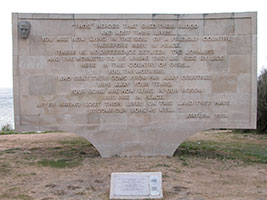
Ari Burnu Memorial at Anzac Cove
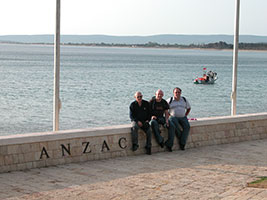
D’s Dad, Brother & D @ Anzac Memorial
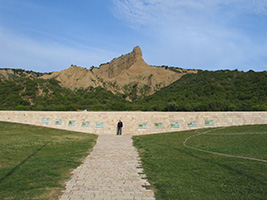
D’s Dad @ Anzac Memorial with Sphinx behind
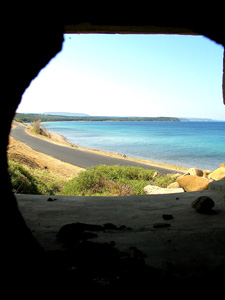
Anzac Cove from Gun Emplacement
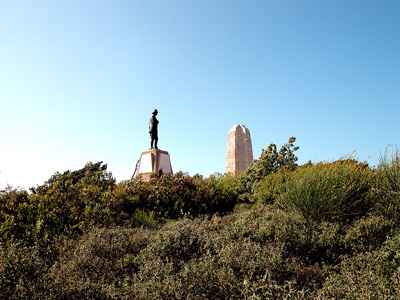
The Turkish Memorial at Chunuk Bair from Shrapnel Gulley
Gallipoli truly is a humbling place—especially for New Zealanders and Australians—but it also offers powerful reminders of humanity. The Ari Burnu Memorial at Anzac Cove inscribed with Atatürk’s words, and the Respect to Mehmetçik monument, both speak to the idea that even in the midst of adversity and loss, compassion and respect can still shine through.
After leaving Gallipoli, we headed further down the peninsula and ran straight into massive traffic jams—literally hundreds of buses. It turned out it was a memorial day for Turkish troops, and everything was moving at a crawl.
As we inched into a small village in the slow-moving line of vehicles, we came across a police officer directing traffic—complete with a sub-machine gun. David’s brother, who was driving, hesitated for a moment, half-considering ignoring the officer’s instruction to turn in a different direction to what our GPS was insisting we needed. The officer then gave a very clear (and very subtle) indication of where we were going—using the machine-pistol as a pointer—and we quickly decided that discretion really was the better part of valour. A reminder, in case we needed one, that we definitely weren’t in New Zealand.
From Gallipoli we headed across the peninsula looking for a ferry to cross the Dardanelles Strait. We ended up stopping for a meal at a small café—Café Vera—near the Ottoman fortress Kilitbahir Castle (Kilitbahir Kalesi).
The owner was a delightful chap who, once again, reminded us what we’d already been noticing about Turkey. Lunch felt less like “being served” and more like being welcomed—almost as if we’d wandered in on friends or relatives and been invited to sit down and share a meal.
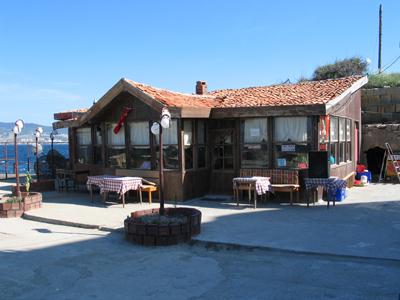
Café Vera
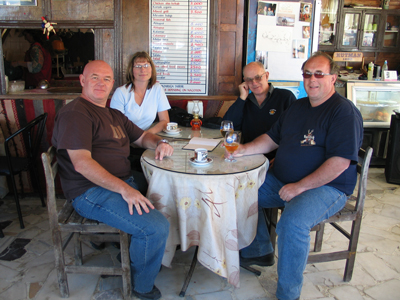
Steve (David’s brother), C, Peter (David’s dad) & David @ Café Vera
After lunch, we spent some time wandering around Kilitbahir Castle (Kilitbahir Kalesi), an Ottoman fortress on the European (Gallipoli Peninsula) side of the Dardanelles, looking straight across the strait towards Çanakkale on the Asian side.
It was built in 1463 to help control the Narrows, and you can immediately see why this spot was chosen. The castle sits in a commanding position over the waterway, with views that make it feel less like a ruin and more like a place that’s still keeping watch.
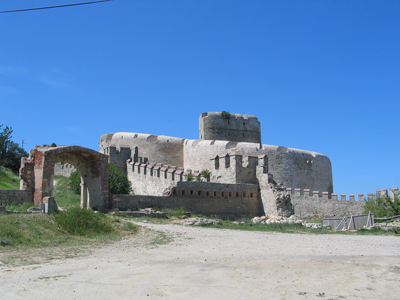
Kilitbahir Castle
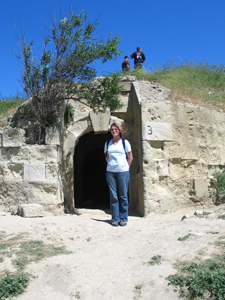
C @ Kilitbahir Castle
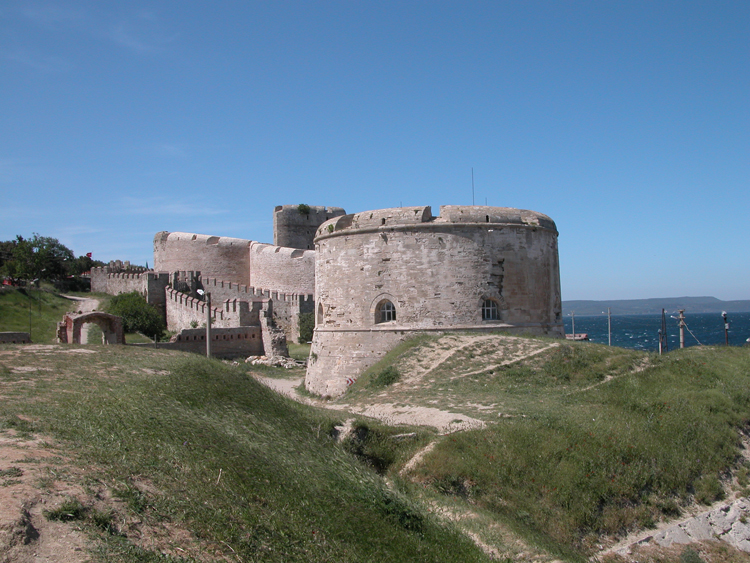
Kilitbahir Castle & the Dardanelles
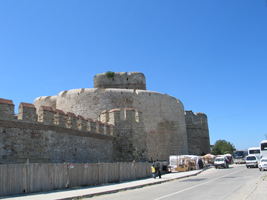
Kilitbahir Castle
Kilitbahir Castle
Kilitbahir Castle
After spending the night at a hotel in a former warehouse right on the water near Eceabat—where we enjoyed a memorable meal (see Tip below)—we caught the ferry across the Dardanelles to Çanakkale. On board were a number of soldiers, and one of them struck up a conversation with Carolyn after politely asking if it would be alright for him to practise his English with her.
After we landed on the Asian side of the Dardanelles, we started our meandering trip back to Istanbul. We weren’t in a rush, and that turned out to be a good thing, because en route we came across the archaeological site of Troy—one of those names you grow up hearing, half-myth, half-history, and then suddenly you’re standing there in the dust and the heat thinking, so this is actually real.
Troy isn’t one neat “ancient city” so much as a place with layers—4,000+ years of destruction, rebuilding, and starting over again, stacked on top of each other.
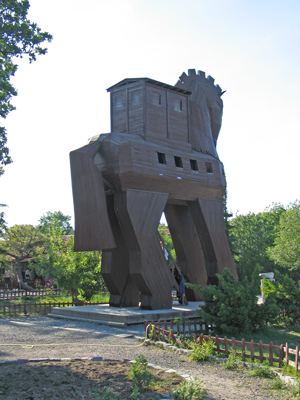
A Horse @ Troy
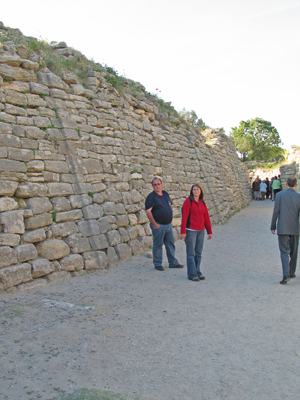
D & C @ Troy
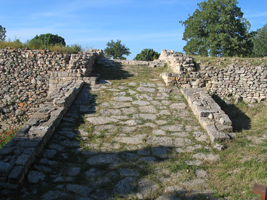
Road @ Troy
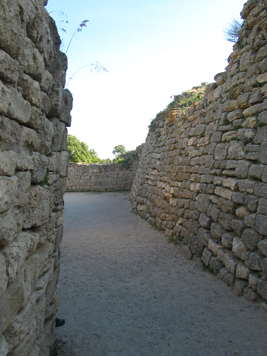
Troy
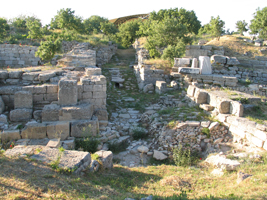
Troy
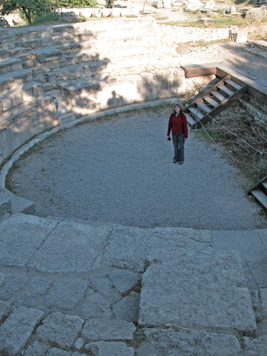
C @ Troy
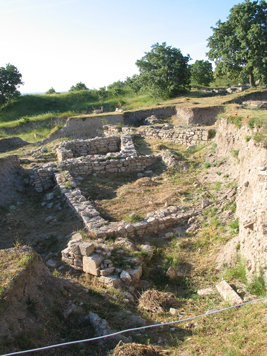
Troy
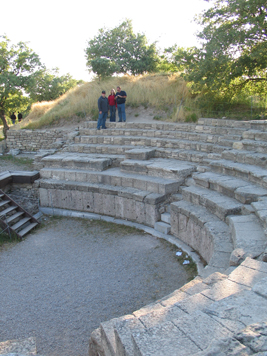
D’s Brother, C & D @ Troy
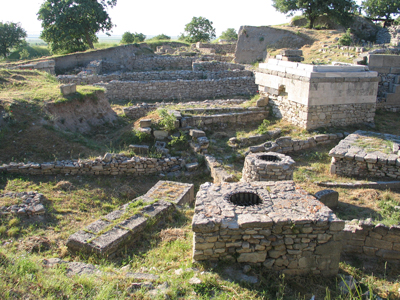
Troy
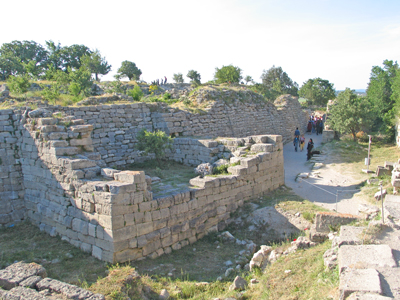
Troy
From Troy we continued on with one clear goal: we wanted to see the Black Sea. After overnighting in Bursa, we carried on the next day along multi-lane motorways that were surprisingly quiet—wide, sparsely trafficked, and in places not exactly what you’d call well maintained.
That stretch of road delivered a few more “only-in-travel” moments. We were passed by a couple of sports bikes doing wheelies at around 120 kph, as if it was the most normal thing in the world. Not long after, we were flagged down by police—machine-pistols and all—and issued a speeding fine. Cash, of course.
And then, slightly further up the road, another police officer stepped out to flag us down again, with a very different outcome. The driver of the car beside us panicked, hit the brakes, locked up, and ended up leaving the road and rolling his car. We pulled over, watched the police sprint towards the wreck, and saw the driver climb out—shaken, but seemingly unhurt.
It was a sobering moment. Once it was clear help was on hand and the driver was out of immediate danger, we decided—yet again—that discretion really was the better part of valour, and we quietly slipped away to continue our journey.
Eventually we arrived on the Black Sea coast at Akçakoca, where we took a stroll along the waterfront, including a stop at the Akçakoca Bey – Osmangazi (Osman Gazi) – Konuralp Bey Monument, which (as the name suggests) depicts the three historic figures it is named for.
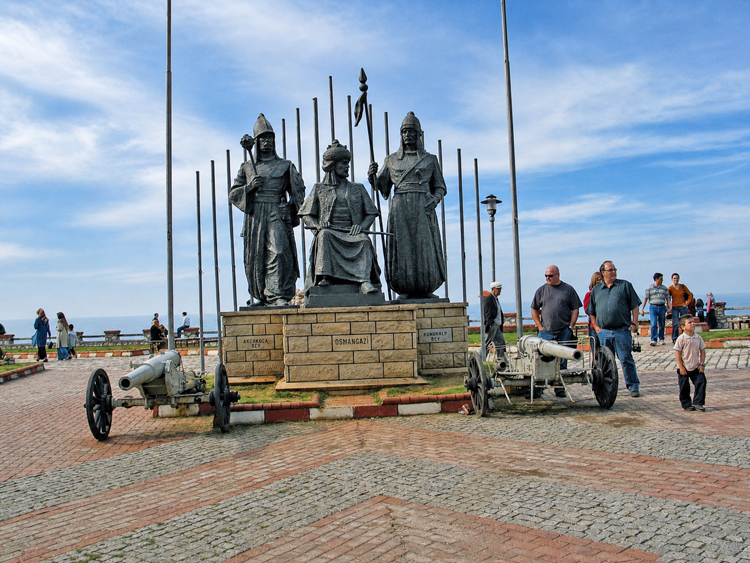
Akçakoca Bey – Osmangazi (Osman Gazi) – Konuralp Bey Monument
Elsewhere on the waterfront we found a couple of sights that felt very “Akçakoca”. One was the sculpture of a traditional kağnı ox-cart—a simple, sturdy reminder of how people and goods once moved through this region long before cars and highways.
Not far away we spotted the distinctive, modern Akçakoca Merkez Camii (mosque), with a roof design inspired by the form of a Seljuk/Turkish tent. It was one of those buildings that makes you stop mid-walk and look twice.
The kağnı sculpture isn’t just decorative either—it’s a heritage piece linked to Akçakoca’s transport history, especially the use of kağnı carts during the Turkish War of Independence. Local history notes that supplies landed on the Akçakoca coast were then sent inland by kağnı and caravans, which gave the waterfront a whole extra layer of meaning for us as we walked it.
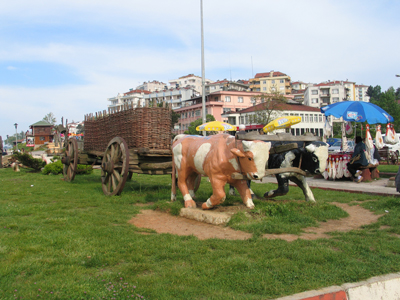
Kağnı ox-cart sculpture @ Akçakoca
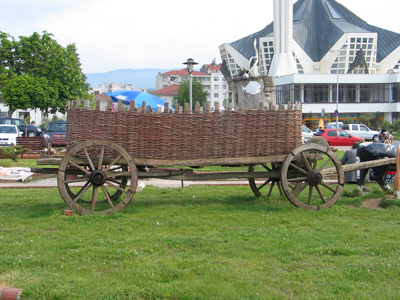
Kağnı ox-cart sculpture @ Akçakoca with Merkez Camii mosque
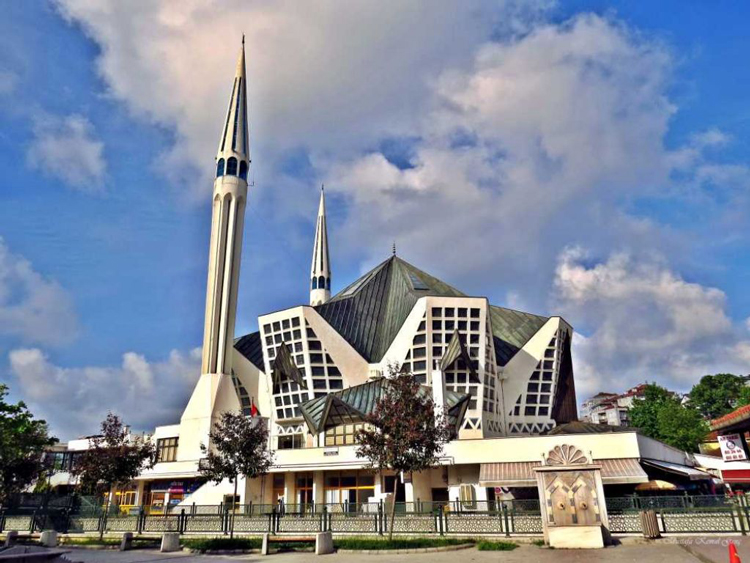
Akçakoca Merkez Camii (mosque)
Once we’d finished looking around, we jumped back in the car and continued on to Kefken, where we stayed the night—once again on the receiving end of incredible Turkish hospitality.
We did a little exploring there too, and the lookout delivered a spectacular view: the Black Sea stretching away in front of us, Kefken Island (Kefken Adası) sitting rocky and fortified just offshore, and the Kefken harbour with its long breakwaters and little lighthouses. It was one of those scenes that made us want to linger a while longer and simply take it all in.
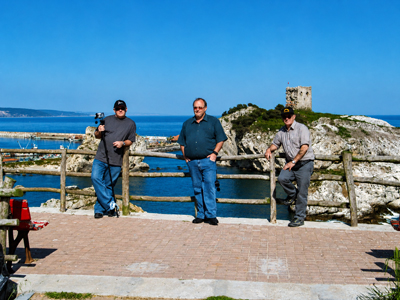
Steve (D’s brother), D and Peter (D’s Dad)
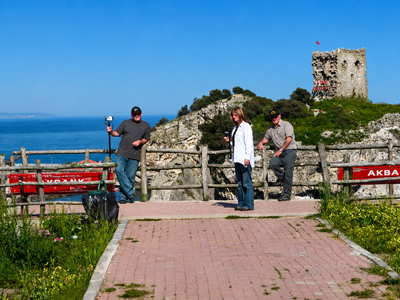
Steve (D’s brother), C and Peter (D’s Dad)
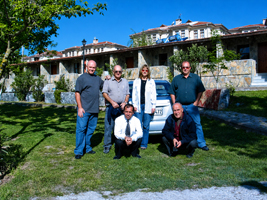
Us with our Hosts
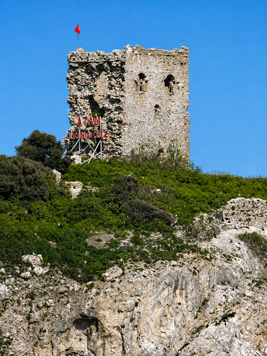
Tower on Kefken Island
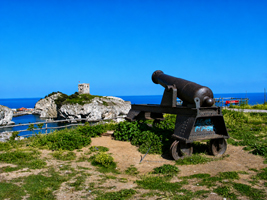
Canon & Kefken Island
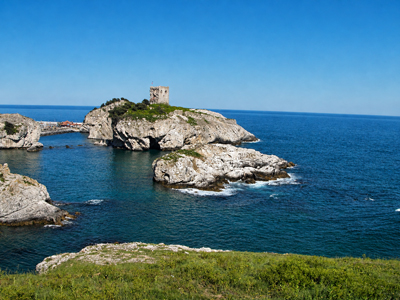
Black Sea & Kefken Island
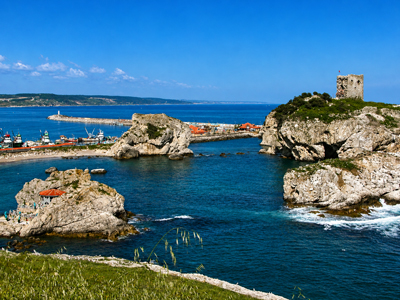
Black Sea, Kefken Harbour & Kefken Island
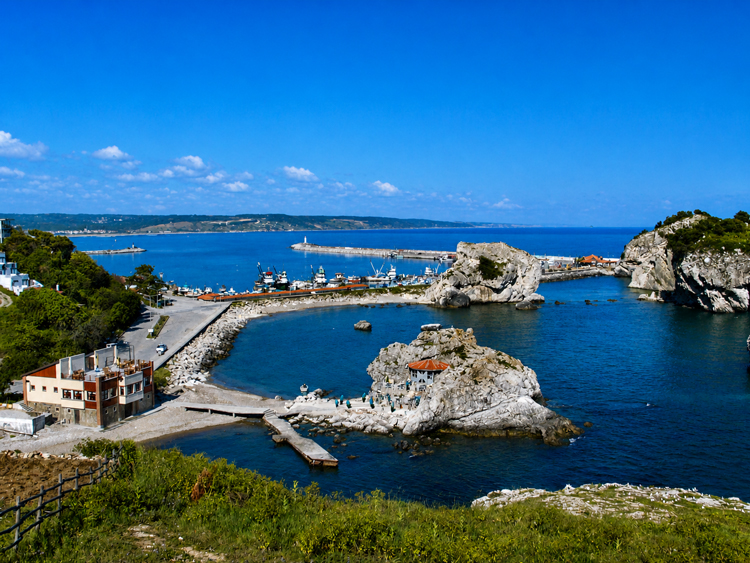
Black Sea & Kefken Harbour
Back in the car the next day, we began the trip back to Istanbul.
During our travels we also spent time on smaller dual carriageways winding through rural countryside. It was surprising—and a bit mystifying—to keep spotting not just one or two, but several stalled multi-storey apartment developments sitting out in the fields. The concrete shells were clearly up, but it looked as though work had stopped years earlier, long before basics like windows and joinery were ever installed. They stood there half-finished and weathering, like someone had hit pause mid-project and never come back.
Along the way we passed through a number of small villages, and we couldn’t help noticing the variety of transport on the roads. There were horse and carts, of course, but also what looked like adapted rotary hoes towing little trailers—machines we quickly started referring to as “Turkish pickups.”
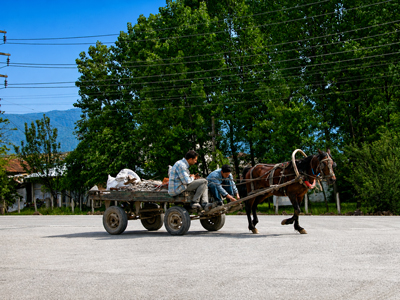
Turkish Heavy Transport
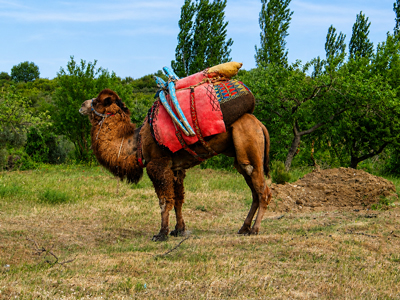
Turkish Moped
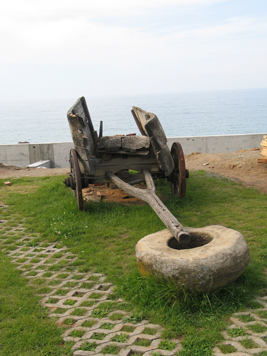
Old Cart
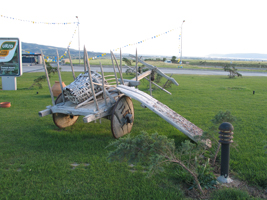
Easyload Cart
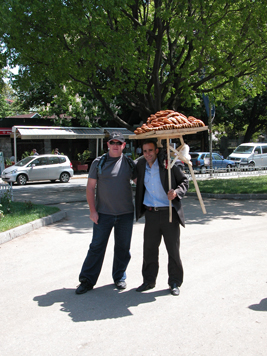
Steve (D’s brother) & Bagel Delivery
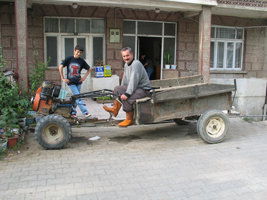
Turkish Pickup
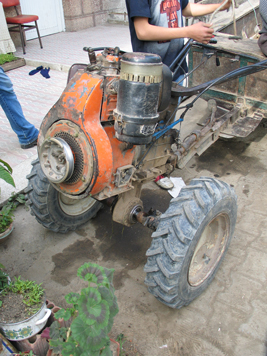
Turkish Pickup Motor
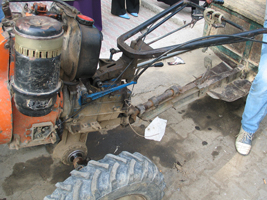
Turkish Pickup Hitch
Tip: Be cautious about how much food you order. At a hotel near Eceabat, we stopped for a meal and did what seemed sensible at the time—looked in the cabinet, each chose something, paid the bill (which didn’t raise any alarms), then sat down to wait.
When the food arrived, it completely covered the table. It could have fed four times our number, easily—because they’d decided that when each of us pointed at something, we must have meant we wanted one of each item for everyone. So instead of one of each dish, we got four of each dish.
We just stared at it for a second, then looked at each other and burst out laughing. It was one of those classic travel moments where you realise—too late—that while you thought you’d beaten the communication barrier, reality had other ideas.
Highlight: The People! Turkey itself is a pretty amazing place, but what really stayed with us was the warmth of the people. Given the shared history—and the fact that New Zealanders arrived on these shores during WWI as part of an invasion—it’s something quite special to experience.
Everywhere we went, we were met with kindness. People were friendly, welcoming, and often treated us less like tourists and more like long-lost cousins. It’s not something you forget in a hurry. Of all the places we’ve travelled, Turkey stands out as having some of the warmest, most genuinely hospitable people we’ve encountered.
Memory: Standing in Shrapnel Gully, Gallipoli – On a fine day there, David found himself standing on a small rise, looking across at his brother on another, with his father further up the gully and Carolyn further down. He still vividly remembers the moment the mana of the place seemed to engulf him, holding him completely still for several long minutes. It was one of those rare travel moments that goes beyond sightseeing and settles somewhere much deeper. Hence why Gallipoli is one of David’s Special Places.
Closing Thought: Turkey was almost an afterthought on our itinerary, but we’re incredibly glad we made the trip. The warmth of the people and the depth of history have so much to offer. We genuinely can’t wait to come back—this time with more time to immerse ourselves properly and explore even more of everything Turkey has to share.
We’ve been lucky over the years to travel more than many—though nowhere near as much as we still aspire to. The world is a big place, and there are so many destinations left to discover: places we haven’t seen yet, places we want to explore more thoroughly, and old favourites we can’t wait to reconnect with.
Elsewhere on Crows on the Go, you’ll find:
• more about our travels and the places we’ve been
• our thoughts (and, in some cases, tips) on those destinations
• the places that have become “special” to us
• and more!