
Where We Have Been - Europe - Germany
Europe had been on our bucket list for years before we finally made it there. From the moment we arrived, the history captured us—walking streets people have walked for centuries, standing in places we’d only ever seen in movies or read about in books, and realising how much of the world’s story is layered into everyday life. It’s a place we never seem to get enough of, and it now sits very high on our list of destinations.
If you’d like to follow our journey in order, here’s our route—based simply on where we stayed: Rome, Florence, Nice, Barcelona, Paris, Berlin, Prague, Munich, Zurich, Venice, Milan, Athens, Istanbul.
We arrived in Germany after travelling overnight from Paris—our first experience of sleeping on a train. It was memorable in more ways than one, and also a sharp lesson in paying attention.
The conductor had explained that the train would split in Belgium, but in the early hours of the morning David, still half asleep, wandered off to the toilet. Had he crossed into the wrong carriage, things could have ended very differently.
Stepping back out, he was jolted fully awake by the realisation that the rest of the train had disappeared.
We didn’t have much time in Berlin, but it was high on David’s bullet list—so it became a non-negotiable stop on our travels.
Berlin’s most instantly recognisable landmark is almost certainly the Brandenburg Gate, an iconic late-18th-century monument. Just nearby is the Reichstag building, home to Germany’s federal parliament (the Bundestag).
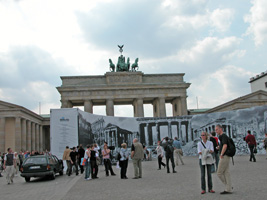
The Brandenberg Gate
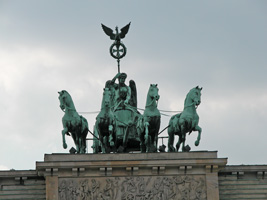
The Brandenberg Gate

Reichstag Building
Elsewhere in central Berlin, another well-known landmark is the Kaiser Wilhelm Memorial Church, which was severely damaged during an Allied bombing raid in 1943. Preserved as a ruin alongside a modern church, it stands as a powerful reminder of the destruction of World War II.
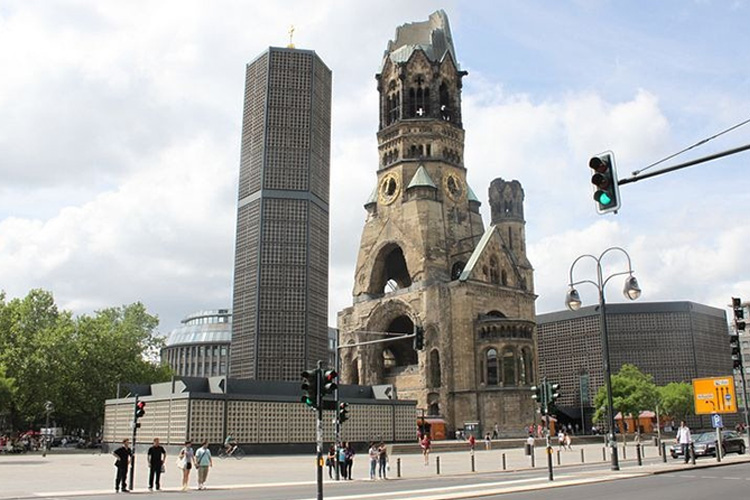
The Kaiser Wilhelm Memorial Church or “the hollow tooth” as Berliners refer to it
As you wander Berlin, you’ll often find yourself stepping over a double line of cobblestones, sometimes punctuated by a bronze plaque. Together, they mark the route the Berlin Wall once took through the city—where it split Berlin into the American and Soviet Sectors.
And if you want to go deeper, Berlin has the Berlin Wall History Mile (Geschichtsmeile Berliner Mauer): an outdoor, multilingual permanent exhibition with currently 32 stations along the inner-city “Wall Trail.” Each stop shares photos and short texts about what happened right where you’re standing—politics, everyday life, escape attempts, and the Wall’s victims.
(Seeing the Wall’s remnants like this is surreal—history made tangible, minus the watchtowers, barbed wire, dogs, guns, and soldiers.)
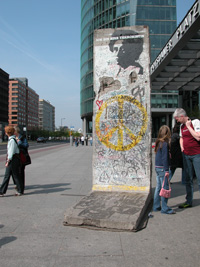
A section of The Berlin Wall
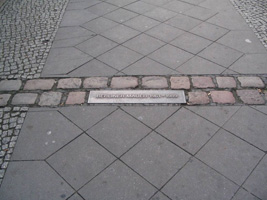
The Berlin History Mile
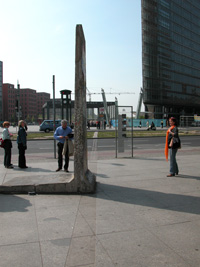
A section of The Berlin Wall
Another powerful symbol of Berlin—and a location made famous by countless spy thrillers in both print and film—is Checkpoint Charlie. While the modern-day presentation can feel a little commercial, it’s still well worth a visit. The same goes for the nearby Checkpoint Charlie Museum, where it’s impossible not to admire the sheer ingenuity and desperation of those who devised extraordinary methods to escape from the Soviet sector.
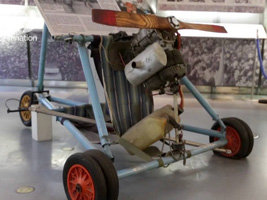
Exhibit in the Check Point Charlie Museum
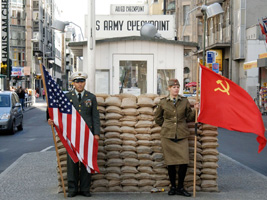
Check Point Charlie
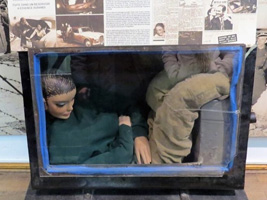
Exhibit in the Check Point Charlie Museum
A visit to the Jewish Museum Berlin offers a sobering, thought-provoking insight into Jewish life in Germany—past and present—and the long history of persecution and resilience that runs through it.
And the Memorial to the Murdered Jews of Europe (the Holocaust Memorial) is also worth making time for. The vast field of concrete stelae is deceptively simple, but walking into it can feel disorienting and heavy in a way that stays with you—especially if you also visit the Information Centre beneath it, which grounds the abstraction in personal stories and historical context.
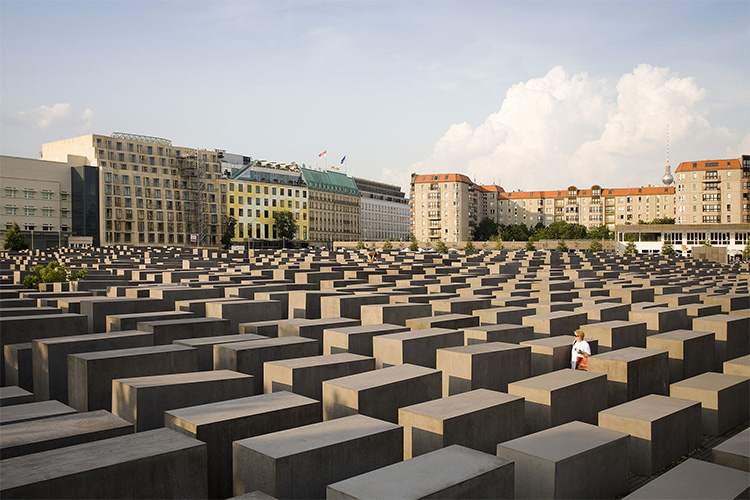
The Memorial to the Murdered Jews of Europe
We really enjoyed our time in Munich—where we had a beer or three (hey, it’s Munich… Oktoberfest doesn’t exactly discourage the habit).
After tracking down the famous Glockenspiel, with its life-sized figures set into the New Town Hall(Neues Rathaus) overlooking Marienplatz, we wandered into a nearby courtyard and found a perfect spot to kick back for a quick break. Lunch came with a side of people-watching—and, naturally, another beer—at the Ratskeller.
It was there that Carolyn was introduced to Radler: a refreshing mix of beer and lemon soda, similar to a shandy but with a brighter, more robust citrus kick—said to have originated in Bavaria not far from Munich.
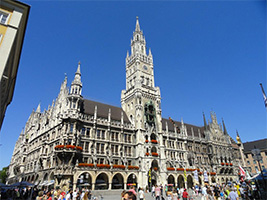
The New Town Hall (Neues Rathaus)
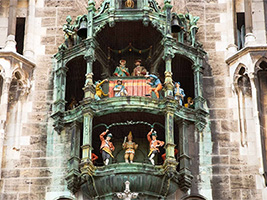
The Rathau Glockenspiel
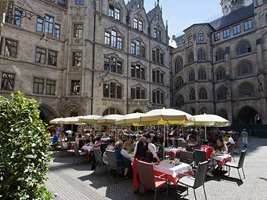
Ratskeller in the Neues Rathau Inner Courtyard
Given Munich’s legendary beer halls—and the fact Oktoberfest is held there every year—a proper beer hall visit felt mandatory. The waitresses were the real show: weaving between tight-packed wooden tables and benches while carrying multiple hefty steins at once (it looked like a dozen, and somehow they never broke stride).
We chose the Hofbräuhaus am Platzl, Munich’s most famous beer hall. You’ll often hear it described as holding around 5,000 people, but official/local tourism sources put it closer to about 3,000 seated inside, plus around 400 more in the beer garden. Either way, it’s enormous—and loud in the best way.
We’d met an older American, Bill, who was travelling solo, so we invited him to come along and experience a Munich Beer Hall with us. It turned into one of those unexpectedly lovely evenings—good conversation, shared laughs, and the easy camaraderie that seems to happen faster when everyone’s holding a stein. We learned, of all things, that he’d been involved in designing the Pringles container. We even exchanged Christmas cards for a number of years afterward.
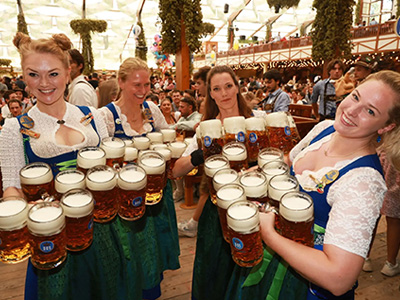
Beer Waitresses
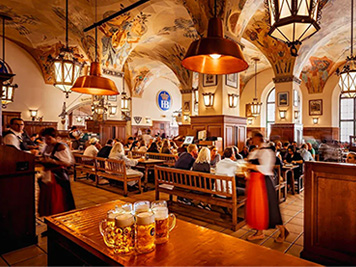
Hofbräuhaus
While we were in Munich, we took a guided tour to Dachau, only about half an hour away by train. We were lucky—there were just four of us on the tour, and the other two didn’t speak English, which meant we were able to talk with the guide at length and ask far more questions than you usually can in a bigger group.
Visiting a concentration camp was another item on David’s bucket list, and Dachau—while not the largest—was one of the first and the longest-running of the Nazi concentration camps.
You enter Dachau through the gate bearing the infamous lie Arbeit macht frei (“work makes one free”) worked into the metal. Standing there, it’s hard to comprehend the scale of what happened beyond those gates. So few of the people forced through them—whether on foot or packed into train carriages—ever left again, let alone “free.”
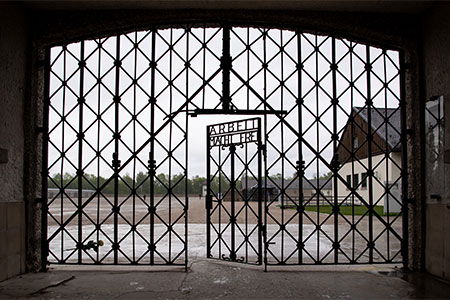
Work Makes One Free
It was hard to grasp the true scope of what had happened there. We moved through the site in something like a daze—observing, listening, trying to take it in. David had his camera with him, but for some reason he never once felt inclined to lift it to his eye.
The tour took us to the former shower rooms—rooms later adapted and presented as gas chambers—the crematoria where bodies were burned, and the grounds where ash was piled into mounds. We stood before the “Tomb of the Unknown”, then walked the alleyway to the Death Wall, where prisoners were executed. We also visited the reconstructed barracks, and finally the Memorial and Museum.
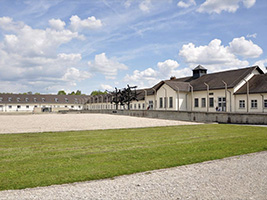
Dachau
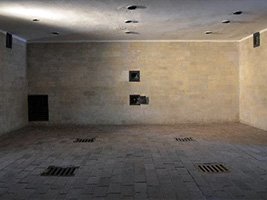
“Showers”
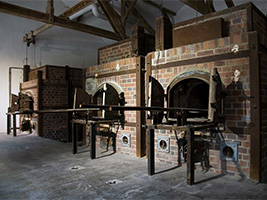
Ovens
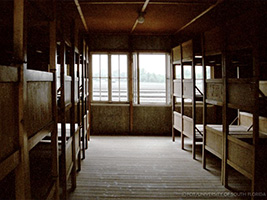
Barracks (somewhat sanitised)
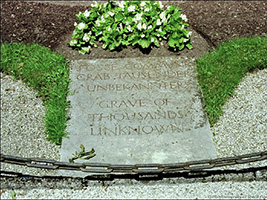
Tomb of the Thousands Unknown
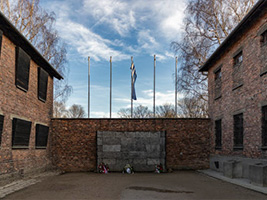
Death Wall
What many of us don’t realise when we first think about the concentration camps is that it wasn’t only Jewish people who were imprisoned, brutalised, and killed. The Nazis also targeted and incarcerated political prisoners (including communists and social democrats), resistance fighters, clergy, Romani/Sinti, homosexual men, Jehovah’s Witnesses, and others—along with prisoners from many occupied countries and, in some cases, prisoners of war.
By no means does that diminish the catastrophic loss of Jewish life. It’s simply part of understanding the breadth of persecution. One post-liberation U.S. Seventh Army report includes execution figures in a section titled “Executions,” listing 16,717 for a category it labels “Non-Aliens (Germans from foreign countries)” between October 1940 and March 1945.
Dachau opened on 22 March 1933 and was liberated by American forces on 29 April 1945.
The International Monument at Dachau is a moving, appropriate tribute to the victims and survivors of the evil that flourished there. Its central bronze sculpture shows human figures entangled in barbed wire, framed by stylised concrete pillars that echo the camp’s guard installations.
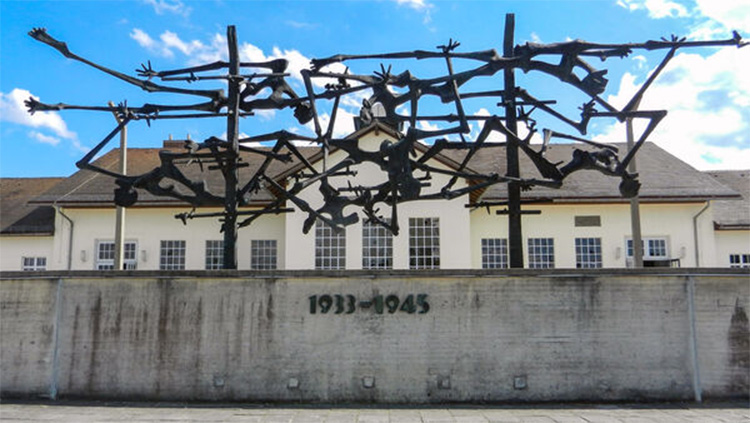
The International Monument at Dachau
From Munich, we took a day trip to the magical Neuschwanstein Castle, commissioned by King Ludwig II of Bavaria—“Mad King Ludwig.” The fairytale silhouette is so iconic it’s often said to have influenced Disney’s castle imagery including Walt Disney’s Fantasy Land’s Sleeping Beauty Castle (at the very least, it’s widely credited as inspiration for Disney’s castle logo).
We also visited Hohenschwangau Castle, just below Neuschwanstein—rebuilt in the 1830s by Ludwig’s father and later Ludwig’s childhood home. Seeing the two together makes it easy to imagine how the place seeded his romantic, otherworldly vision for Neuschwanstein.
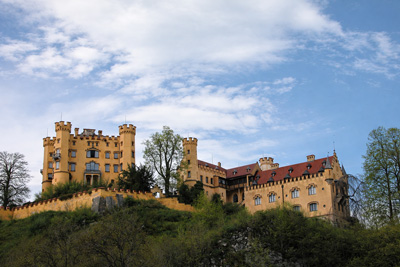
Hohenschwangau Castle
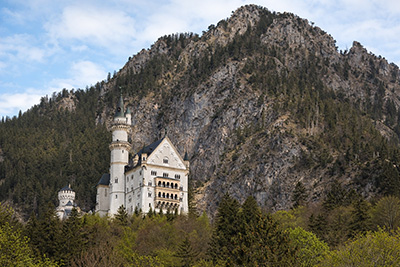
Neuschwanstein Castle
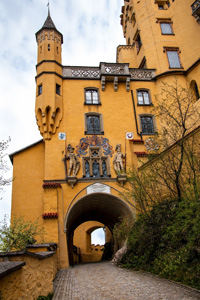
Hohenschwangau Castle
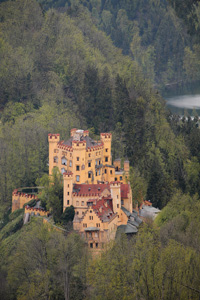
Hohenschwangau Castle
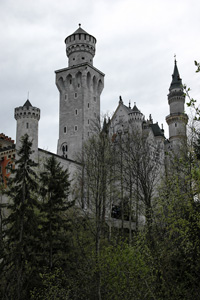
Neuschwanstein Castle
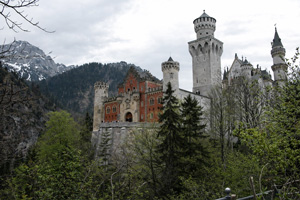
Neuschwanstein Castle
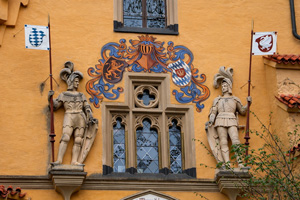
Hohenschwangau Castle
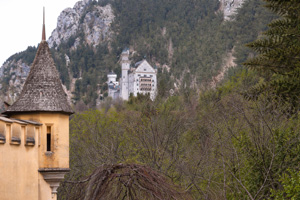
Neuschwanstein Castle from Hohenschwangau Castle
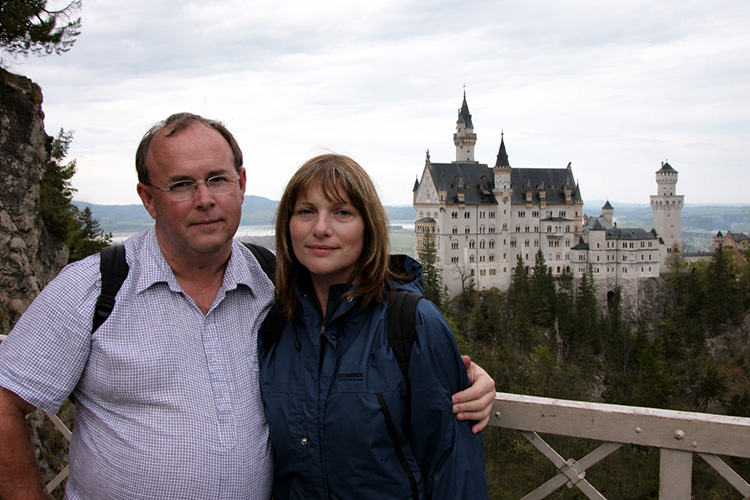
D & C & Neuschwanstein Castle
As our route had us passing on the overnight train, we decided to hop off in Wolfsburg—home of the Volkswagen Group, and therefore not just Volkswagen itself but brands like Audi, Bentley, Lamborghini, Porsche and more.
We stepped down onto the platform in the grey-blue dawn, wandered across to Autostadt (“Automobile City”), and ended up perched outside the entrance waiting for the doors to open. The staff arrived well after we did, took pity on the two “lost tourists” camped out front, and invited us into the Customer Centre for a hot drink while we waited for the first tour.
The tour was absolutely worth it. Watching the production line in action—seeing cars being assembled piece by piece—was mesmerising in that quietly industrial way, where everything is timed, choreographed, and precise.
One of the most memorable moments was seeing a customer collect her new VW Golf. She was greeted like a VIP: met by a concierge, guided through gates and down a grand staircase, then onto a little red-carpet moment where her car waited. Flowers, keys, a final smile—and then she simply drove out, brand new car and all.
And the scale of the place is genuinely impressive. Autostadt’s iconic car towers store up to 800 new cars in total, and the system moves an average of about 500 cars a day for delivery and pick-up.
After the tour, we took our time in the Volkswagen Museum, then wandered the grounds and visited the various marque pavilions—one per brand—which made the whole complex feel more like a campus than a single attraction.
If you’re even slightly into cars, Wolfsburg is well worth the stop.
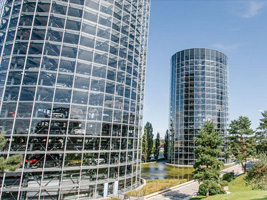
The Car Towers
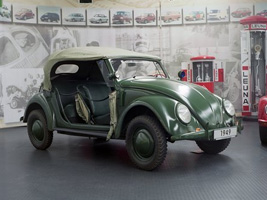
An Interesting Beetle
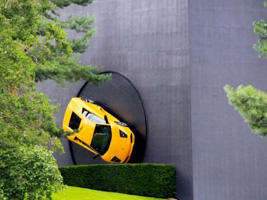
The Lamborghini Pavillion
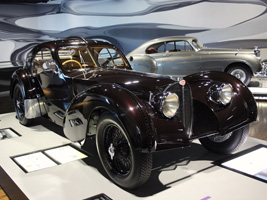
We’ve been lucky over the years to travel more than many—though nowhere near as much as we still aspire to. The world is a big place, and there are so many destinations left to discover: places we haven’t seen yet, places we want to explore more thoroughly, and old favourites we can’t wait to reconnect with.
Elsewhere on Crows on the Go, you’ll find:
• more about our travels and the places we’ve been
• our thoughts (and, in some cases, tips) on those destinations
• the places that have become “special” to us
• and more!