
Where We Have Been - NZ - Waikato Region
We won the lottery just by being born—and getting to live—in a stunning part of New Zealand: Taranaki, with the majestic Mount Taranaki (Mount Egmont) presiding over everything. It’s one of those places where you really can ski on the mountain in the morning and finish the day watching the sun drop over world-class surf breaks in the afternoon.
We’ve explored pretty much all of our beautiful home country, from Cape Reinga in the far north to Milford Sound in the far south (David has even dived with the Great Whites off Stewart Island).
As we’ve travelled so widely around our home country, we’ll cover New Zealand region by region, sharing what we consider some of the highlights.
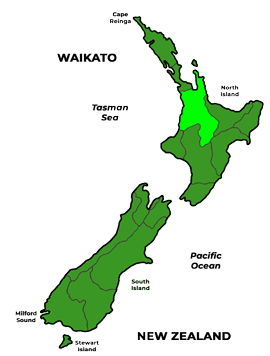
One of the gems of the Waikato is the Coromandel Peninsula. Home to the historic gold-mining areas of Thames, the visually stunning Karangahake Gorge, and the still-operating Martha Mine at Waihi, it’s also a place where you can find crystals, agates and plenty of fossils—including fossilised timber—if you know where to look.
It’s a rugged part of the country, and it’s also a favourite playground for Aucklanders. Spots like Pauanui (a man-made waterway holiday area) and the beach towns of Whitianga and Whangamatā are popular for good reason. That said, some of the quieter places can be even better—often simply because there are fewer people around.
Cathedral Cove (near Whitianga, by the beach village of Hahei) is one of the Coromandel’s most iconic spots—a beautiful white-sand bay framed by cliffs, with a natural rock archway carved by the sea. It sits within Cathedral Cove Marine Reserve, so the water’s often crystal clear and great for a swim or snorkel, and you can reach it either by the coastal walking track from Hahei or by boat/water taxi from around Mercury Bay.
Another well-known stop is Hot Water Beach, where you can dig a hole in the sand and end up with your own hot “spa pool”, thanks to the geothermal activity beneath the beach. The trick is timing it around low tide, when the hot water isn’t being swallowed by the sea. It’s a truly unique experience—and a funny one too, watching everyone scattered along the shoreline with spades, proudly guarding their little sandy bathtubs.
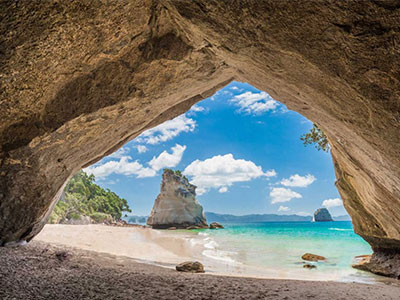
Cathedral Cove
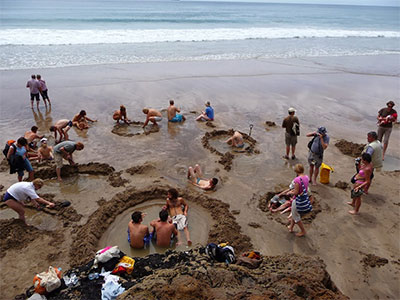
Hot Water Beach
The Karangahake Gorge is a great example of the Coromandel area—stunning scenery that you can soak up just by winding your way through in the car, with the river and steep bush-clad hills doing most of the heavy lifting.
If you want a more up-close look, it’s easy to pull over and jump onto the walking and cycling trail on the opposite side of the river, or take one of the short scenic trails from the Waihi end of the gorge. If you feel like adding something a bit different, you can also hop on the Goldfields Railway (a heritage train service run by Goldfields Railway Inc), which does short scenic trips in the area.
And when you’re ready for a break, the Waikino Hotel is a classic stop right in the gorge—perfect for a meal or a beer before you carry on.
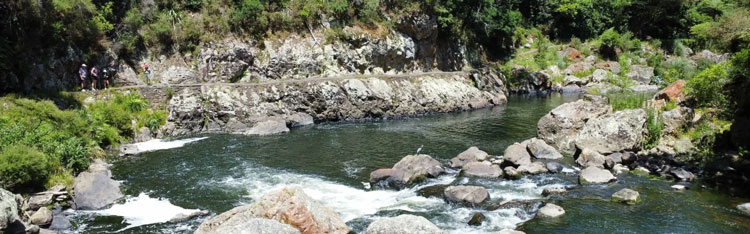
The Karangahake Gorge with the walking and cycling trail across the river
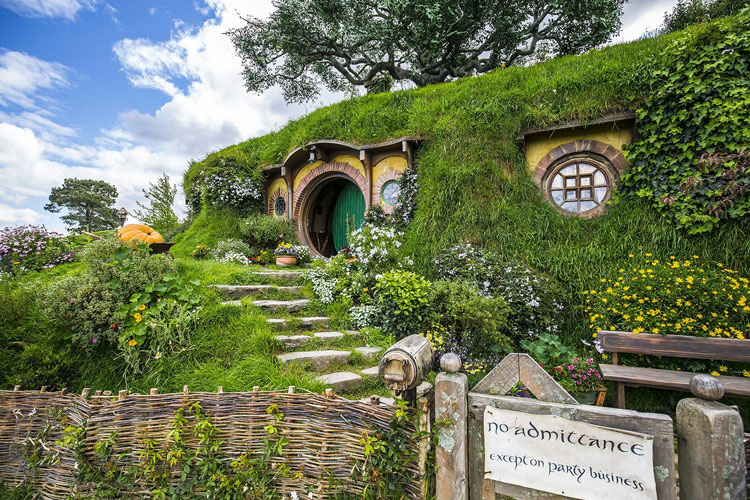
Bilbo Baggins Hobbit Hole @ the Hobbiton Movie Set
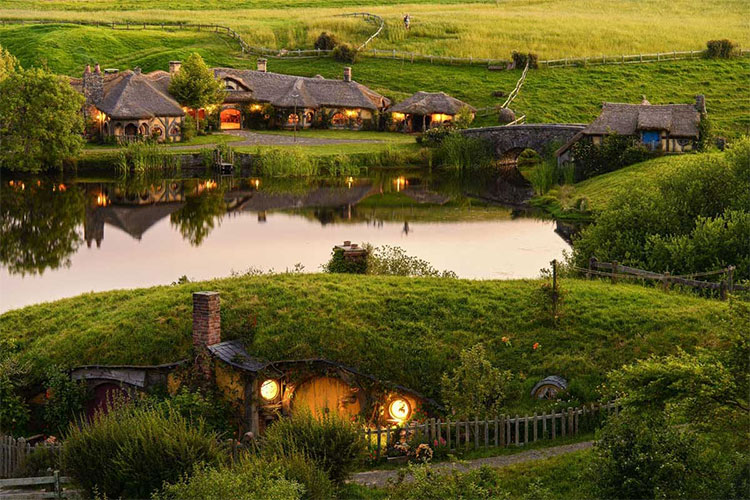
The Green Dragon Inn, the Mill and a Hobbit Hole @ the Hobbiton Movie Set
The Waikato region is one of New Zealand’s prime dairy-farming regions, and it’s also home to a couple of significant waterways.
Lake Taupō is a crater lake formed by a supervolcanic eruption more than 25,000 years ago—one of the biggest eruptions on Earth in relatively recent geological history. The lake and its surrounding rivers and streams, including the Tongariro River and the Tauranga-Taupō River (both near Tūrangi at the southern end of the lake), offer some of the best trout fishing in New Zealand.
Lake Taupō is also the headwaters of New Zealand’s longest river, the Waikato River. At around 425 km long, it flows north through the heart of Hamilton (New Zealand’s fourth-largest city, population roughly 190,000) before emptying into the Tasman Sea just south of Auckland.
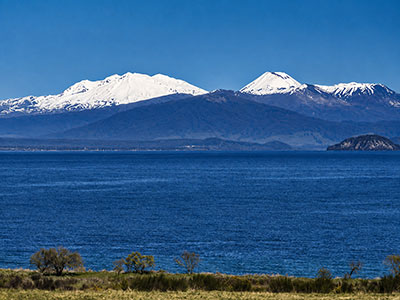
Lake Taupo with Mt Ruapehu, Mt Ngauruhoe and Mt Tongariro
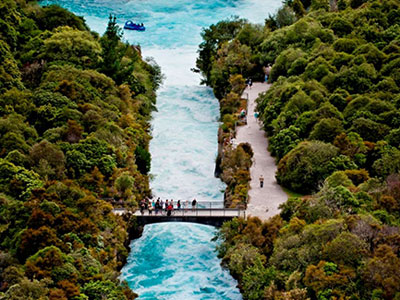
Huka Falls on the Waikato River near Taupo
A possibly overlooked gem in the Waikato is the coastal township of Raglan, about 40km due west ofHamilton. It’s a favourite weekend escape—easy to love for the mix of great cafés (perfect for a long lunch), a strong local art and craft scene, and the chance of catching a gig at one of the local venues.
The town itself wraps around the harbour, and that’s a big part of its charm. In some ways it even reminds us of the Hokianga—that same calm, sheltered-water feel where the pace drops a notch and you find yourself lingering without meaning to. A wander along the wharf is a must—boats coming and going, seabirds hovering hopefully, and that salty west coast air that makes you slow down. There’s also the pedestrian bridge out to thecampground, which is a lovely little walk in its own right and gives you a different angle on the harbour as the light changes.
And then there’s the ocean side: the wild west coast iron-sand beaches (watch you don’t burn you feet) and, for those who surf, what many claim is one of the best surf areas in New Zealand. We’ve never quite got around to trying our hand, but there are a multitude of surf schools in Raglan—and we’re told there are beginner-friendly options too if you’re keen to give it a go.
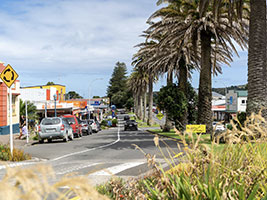
Raglan’s Main Street
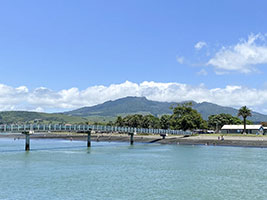
Raglan’s Pedestrian Bridge
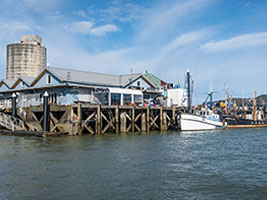
Raglan’s Wharf
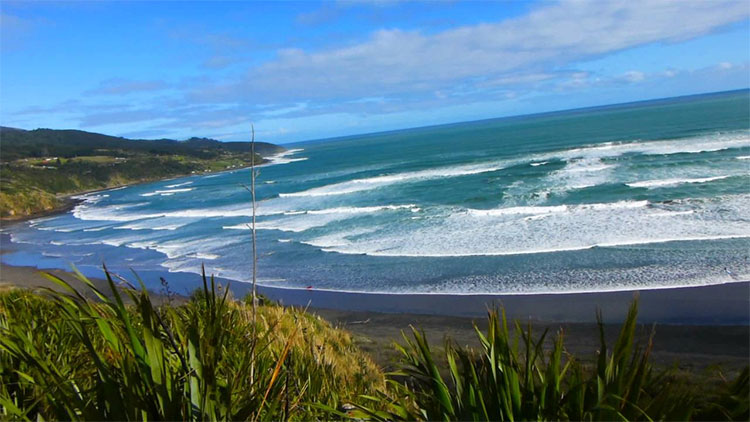
Raglan’s Manu Beach – Reportedly the best left hand break in the Southern Hemisphere
One of our favourite places in the Waikato has to be the Mōkau Coast. We’re sure part of it is simply knowing that once we come out of the Awakino Gorge, we’re within an hour or so of home territory. But it’s more than that—the run along the coast shows the wild west coast at its best but…
If you’re really lucky, you get the moment we always hope for: Mount Taranaki (Mount Egmont) appears in the distance and “welcomes you home” by lifting his cap—the cloud clears and there he stands in full glory, across the water of the North Taranaki Bight. When that happens, the whole drive feels like a homecoming in itself.
Along the way it is worth stopping to see the Three Sisters—those dramatic sea stacks that seem to change shape depending on the tide and the light.
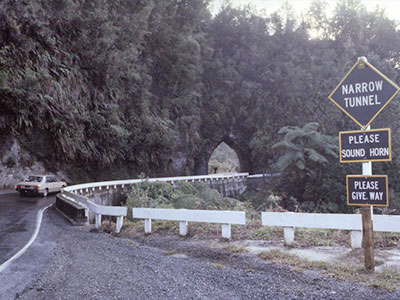
The Tunnel as you enter the Awakino Gorge (since bypassed)
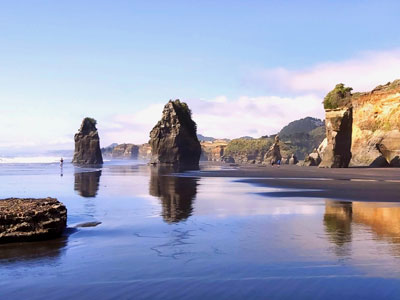
The Three Sisters
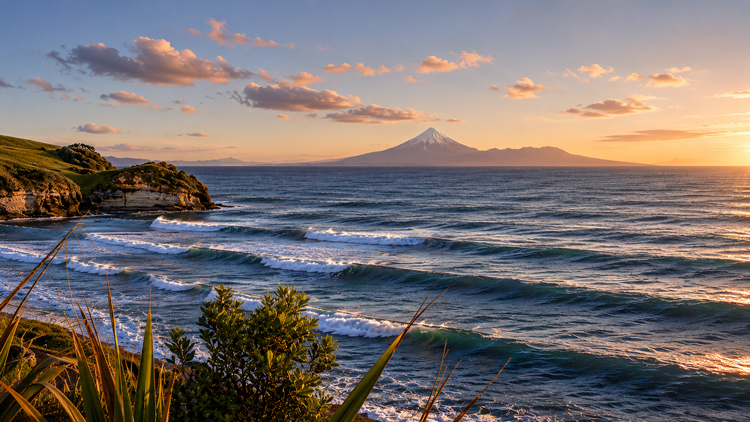
Mount Taranaki (Mount Egmont) from near Mokau
Closing Thought: While there are some genuinely lovely parts of the Waikato, much of it can feel like more of the same—flat plains of pasture and livestock. It’s worth spending a bit of time picking out the highlights, but overall there are other parts of New Zealand that offer many of the same experiences, just with an extra layer of wow.
We’ve been lucky over the years to travel more than many—though nowhere near as much as we still aspire to. The world is a big place, and there are so many destinations left to discover: places we haven’t seen yet, places we want to explore more thoroughly, and old favourites we can’t wait to reconnect with.
Elsewhere on Crows on the Go, you’ll find:
• more about our travels and the places we’ve been
• our thoughts (and, in some cases, tips) on those destinations
• the places that have become “special” to us
• and more!